Top 10 Riding Spots in Jordan
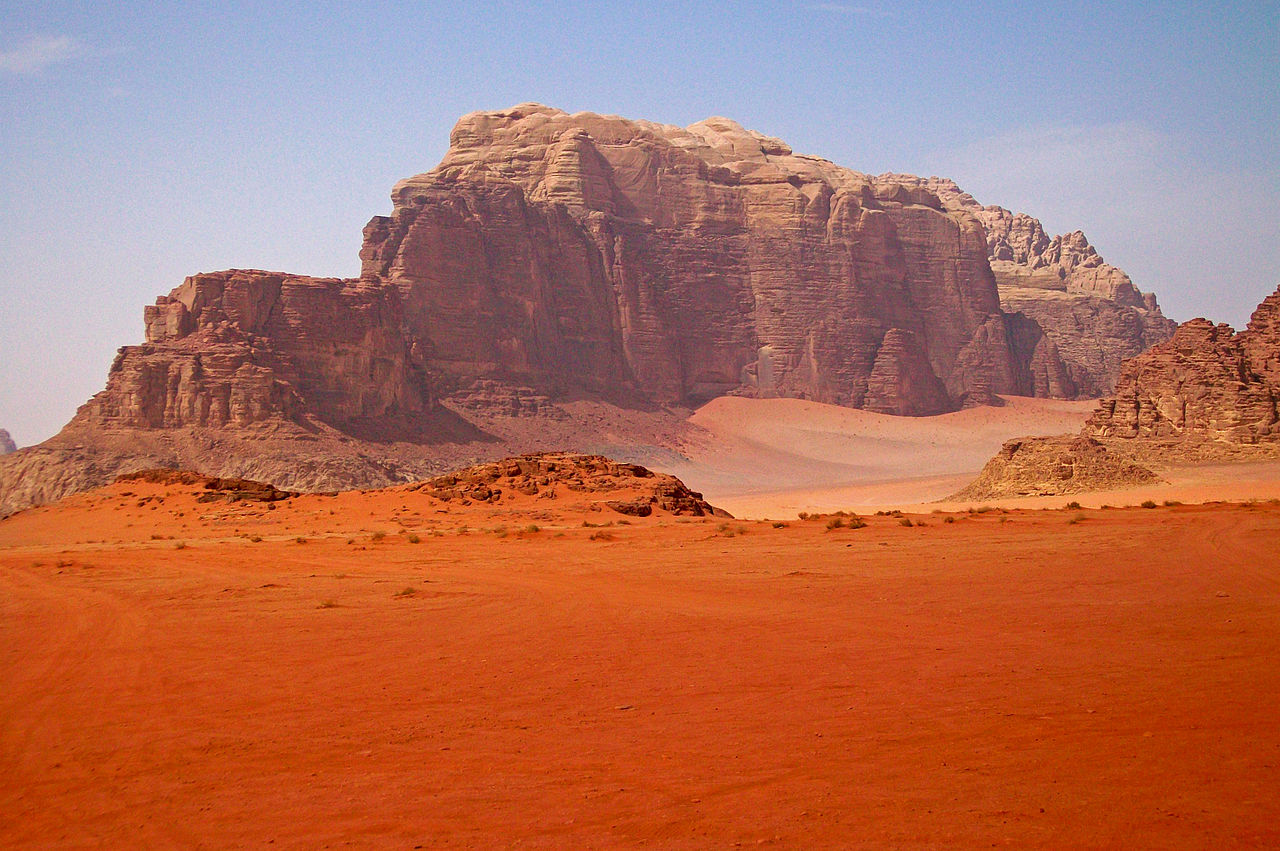
Jordan is the great horse country of the Arab world. The Bedouin desert-bred Arabian — the asil — is the foundational genetic stock of the modern Arabian breed worldwide, and the Royal Jordanian Stables maintain bloodlines of exceptional purity. The country is compact: from the capital Amman in the north to the Red Sea port of Aqaba in the south is roughly 330 km, and almost every destination below sits within a few hours' drive of one of those two gateways. Its sandstone deserts, deep wadis, pine forests and the ride to Petra make for some of the most evocative riding on earth. Everything centres on the map.
A word on timing before the places themselves: Jordan has two genuine riding seasons. Spring, roughly March to May, brings wildflowers to the highlands and mild desert days. Autumn, roughly October to November, is the other window, with stable weather and warm but bearable afternoons. The desert interior in July and August is genuinely dangerous for riding — daytime highs in Wadi Rum can exceed 40°C — so summer is to be avoided for anything south or east of the highlands. Winter nights, by contrast, drop near freezing in the desert, which is why Bedouin camps run heavy blankets and fires.
1. Wadi Rum
The sandstone-and-granite desert south of Aqaba — the landscape of Lawrence of Arabia — is one of the world's great desert-riding venues. A UNESCO World Heritage Site, Rum is a protected area of towering jebels, narrow siqs and red dunes, and it is roughly an hour's drive north of Aqaba airport. Several operators including Wadi Rum Horses run multi-day Bedouin-style camps on Arabian horses bred for the heat and the footing. October to April is the practical window; the monumental rock formations and the nights under an unpolluted sky are as memorable as the riding itself.
2. Petra approach
Multi-day rides connect Wadi Rum to Petra via the high country and the back routes used historically by the Nabataeans, the caravan traders who carved the city around the first century BC. The classic short ride is the stretch from the visitor area down toward the Siq, the narrow 1.2 km gorge that opens onto the Treasury (Al-Khazneh) — horses are a traditional part of the Petra entrance, though the deeper monuments are reached on foot. Arriving from the south, overland, is the great approach: a gradual discovery of the rose-red city rather than the standard turnstile entry. October to April.
3. Dana Biosphere Reserve
The Dana reserve in central Jordan is the country's largest, descending from highland plateau near 1,500 m down through sandstone canyons toward the Rift Valley. It combines mountain, wadi and desert terrain in close proximity, which makes it one of the few places where several climate and vegetation zones can be crossed on horseback within day stages. Several operators run multi-day programmes from the village of Dana. Best in spring (March–May) and autumn (October–November).
4. Royal Stables, Amman
The Royal Jordanian Stables maintain one of the world's most important Arabian breeding programmes, founded under the Hashemite royal family and dedicated to preserving asil desert bloodlines. Visits and rides are arranged by application, and the Arabian Horse Society of Jordan facilitates introductions. For anyone serious about the breed, this is one of a handful of global addresses worth seeing — comparable in stature to Janów Podlaski in Poland and Bábolna in Hungary. The stables sit on the outskirts of Amman, an easy add-on at the start or end of a trip.
5. Wadi Mujib
The Mujib reserve, on the eastern shore of the Dead Sea, is the lowest-altitude nature reserve on earth, dropping toward 400 m below sea level. It offers dramatic canyon-wadi riding through a landscape of water-cut sandstone. This is a specialist-operator destination only: terrain, water levels and heat all demand experienced judgement, and it is not a routine programme. October to April.
6. Northern Forests, Ajloun
Ajloun's pine and oak forests in the north — green, hilly and entirely distinct from the desert — offer cooler riding and a side of Jordan most visitors never picture. The hills around the 12th-century castle of Ajloun, built in the era of Saladin, give shaded woodland trails. Because the climate is Mediterranean rather than desert, the rideable window here runs the opposite way to the south: April to October, when the highlands are at their most pleasant.
7. Madaba and the King's Highway
The historic King's Highway, running south from the mosaic town of Madaba, is one of the oldest continuously used routes in the world and threads the Crusader-castle landscape toward Kerak. Multi-day rides follow it through a country of olive terraces and dramatic Rift escarpments, with the great castle of Kerak — among the best-preserved Crusader fortresses in the Middle East — forming a natural overnight stage. October to April.
8. Eastern Desert (Badia)
The basalt desert east of Amman, the Badia, is the harshest country in Jordan: black volcanic stone, vast horizons and almost no tourist infrastructure. It is rideable only in the cool months and only on specialist trips, and it suits experienced riders prepared for hard footing and self-sufficient logistics. The reward is landscape that very few travellers ever see, including the desert castles (qusur) scattered across the steppe. November to March.
9. Jerash Hippodrome
Jerash, north of Amman, preserves one of the best-surviving provincial Roman cities in the world, and its restored hippodrome stages regular displays of chariot racing and Roman cavalry drill against the original stone seating. It is not trail riding but a living equestrian spectacle on a genuine archaeological stage — for the historically minded it has no real equivalent. Displays generally run weekly from April to October.
10. Dead Sea and Wadi Hasa
Multi-day rides here combine the descent toward the Dead Sea, the salt plain, and the exploration of Wadi Hasa, a perennial-water canyon cutting west to the Rift. The altitude range is part of the appeal and the difficulty: from around 400 m below sea level at the Dead Sea up past 1,000 m in the central mountains, which makes the riding physically demanding. Specialist trips only; October to April.
The asil Arabian
The asil Arabian — the strictly desert-bred Arabian of the Bedouin — is the foundation of the modern global Arabian population, including the Arabians that dominate FEI endurance racing today. Selected over centuries for soundness, stamina and an even temperament in the hardest of climates, the asil is the horse in its original form, before centuries of European breeding reshaped the wider breed. Genuinely asil bloodlines are documented through registration with the Asil Club and similar bodies, and Jordan is one of the heartlands of that heritage.
Bedouin hospitality
Multi-day desert rides in Jordan include genuine Bedouin camping — goat-hair tents, mansaf (the national dish of lamb, rice and fermented yoghurt) and endless cardamom tea, with a traditional welcome that predates tourism by millennia. The hospitality is real, not staged: the character of your outfitter, rather than the scale of any commercial show, decides how deep the experience goes. A small Bedouin-run camp will almost always feel truer than a large packaged one.
Booking and visas
Jordan welcomes visitors with a visa on arrival for most Western passports, and the Jordan Pass (bought before travel) bundles the visa fee with entry to Petra and many other sites, which is worth investigating. Fly into Amman (Queen Alia International) for the north or Aqaba (King Hussein International) for the south. Spring and autumn are the riding seasons; summer is brutal in the desert interior and best avoided. Multi-day rides should be booked three to six months ahead, as the good outfitters and the cool-season dates fill early.
From reading to planning
The world map shows every spot mentioned here, with photos and details one click away.